Showing posts with label Festivals. Show all posts
Showing posts with label Festivals. Show all posts
Friday, November 23, 2018


Thursday, August 2, 2018
Benefits of lighting lamps

Tuesday, August 20, 2013
Rakshabandhan
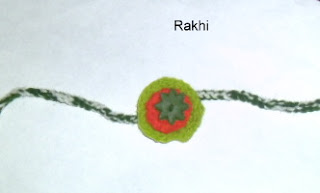
On occasion of rakshabhandan I am sharing the crocheted rakhi that I did for CAL Passionate abt crochet . Crocheted 2 round pieces. Then did a length of chain stitch with two color yarns as I can use them as a cord. Then fixed a small flower done by my sister using lamasa clay Have a fabulous day to all my brothers/sisters




Sunday, January 15, 2012
Pongal Greetings
Pongal Greetings to one and all. At home also we had a small pongal.In this part of the world in Tamilnadu we call it as the harvest festival and lasts for 4 days , 1 st it is Bogi, 2nd day it is Surya pongal, 3 rd day it is Mattu pongal and 4 th day it is Ullavar or Trivalluvar day.
Here are some picture
Fresh turmeric is tied to the pot.as the turmeric plant was not sufficient enough , I used a thread to tie the turmeric to the pot.


When the milk boils it will over flow and this is considered very auspicious
 and finally the pongal - it is a sweet dish made of rice,milk and jaggery. cardamom is added for fragnance.cashewnuts and raisins are fried in ghee and added to this

Here are some picture
Fresh turmeric is tied to the pot.as the turmeric plant was not sufficient enough , I used a thread to tie the turmeric to the pot.
Milk is boiling
When the milk boils it will over flow and this is considered very auspicious
Thursday, October 20, 2011
Hrishi's birthday in Foodys
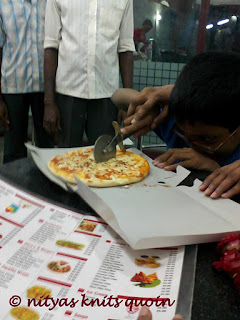
Today our Maharaj - "Hrishikesh" celebrated his birthday in Foodys. Mrs Sasikala Anand and Mr. Anand, had organised a small part of cutting " Pizza". Yes dear Hrishi cut a pizza instead of a cake. Totally we -Hrishis mother and his aunty nitya - were so over whelmed by their kind jesture. Entire staff celebrated and we did not feel that we were in a joint celebrating. I thank Sasikala and Anand to share their space with us. Presenting some of the photos that we took. May GOD bless Hrishi for a healthy life
Welcomed in Foodys by a bunch of Red Roses

The pizza cover had these lovely words hand crafted by Sasikala Anand




Welcomed in Foodys by a bunch of Red Roses

The pizza cover had these lovely words hand crafted by Sasikala Anand

Hrishi cutting the pizza

Hrishi is being assisted by Nitya while cutting the pizza

Hrishi- Kritika Anand- Nitya

Thanks to ........... no adjectives

Wednesday, October 5, 2011
Navrathri 2011
Hai friends sharing this year 2011 pooja celebrations with you.


Just to highlight the story - I am sharing the thoughts behind navrathri- My buddy Vidhya Raghu has given in details the theology.- Tribute to Durga-Lakshmi-Saraswati - https://www.facebook.com/groups/283384795007429/?id=287943527884889
Nine nights in Sanskrit ; Nava meaning Nine and Ratri meaning nights. During these nine nights and ten days, nine forms of Shakti/Devi i.e. female divinity are worshipped. Dasahara, meaning ‘ten days’, becomes dasara in popular parlance. The Navaratri festival or ‘nine day festival’ becomes ‘ten day festival’ with the addition of the last day, Vijayadashami which is its culmination. On all these ten days, the various forms of Mother Mahisasura-mardini (Durga) are worshipped with fervor and devotion. There are different kinds of navarathiri too.. To name a few,
Sharad Navaratri
Vasant Navaratri
Ashada Navaratri
These navaratris are celebrated depending upon the seasons. The kind of navaratri which we celebrate now is sharad navarathri which is the beginning of winter season (Sep-Oct). Nine forms of Shakti are worshipped during the Navaratris. The Devis worshipped depend on the tradition of the region.
Durga :goddess beyond reach
Bhadrakali: the auspicious power of time
Amba or Jagdamba: mother of the world
Annapurna: giver of food and plenty
Sarvamangala: auspicious goddess
Bhairavi: terrible, fearful, power of death
Chandika or Handi: violent, wrathful, furious
Lalita: playful
Bhavani: giver of existence.
According to Hindu mythology, a very powerful Asura-demon king Mahishasuran prayed to the almighty and asked for a boon - that his death should at the hands of a woman and by no other human being or any form of living being.On being granted his wish, he started inflicting atrocities on all human beings on the earth. He considered himself to be immortal as thought that it was impossible for a woman or any female form of a human being to be powerful enough to kill him. When his cruelty became unbearable, people prayed to Sakthi the consort of Lord Shiva to save them from the demon and to provide them with salvation. Sakthi then took the form of Durga and slayed the demon.
The fight between Durga and Mahishasuran is said to have lasted for nine days and nights.The period of nine days and nights when Goddess Durga fought the Asura is celebrated as Navarathiri in Tamilnadu. The Goddess is worshipped during these nine days and nights as it signifies the fight of the good over evil. Goddess Durga is considered as the personification of courage, strength, and power and praying to the goddess, helps one to be blessed with all these qualities especially during Dasara. First three days: The goddess is invoked as a spiritual force called Durga also known as kali in order to destroy all our impurities. Second Three Days: The Mother is adored as a giver of spiritual wealth, Lakshmi, who is considered to have the power of bestowing on her devotees inexhaustible wealth, as she is the goddess of wealth. Final Three Days: The final set of three days is spent in worshipping the goddess of wisdom, Saraswati.In order to have all-round success in life, believers seek the blessings of all three aspects of the divine femininity, hence the nine nights of worship.
In Mysore, this festival is celebrated in a very grand manner. Mysore palace will be illuminated during that time. wow!! what a treat for our eyes!!! There are also kinds of dances associated with this festive.The kinds of dances are "Garba" and "Dandiya" which are famous in Gujarat.
In Southern states of Tamil Nadu and to a lesser extent in Andhra Pradesh and Karnataka, the festival of Navrathri is called Kolu or Navratri Golu, where women set up decorated planks in a corner of the house and decorating it with dolls which are collected over the years. The origin of the word Kolu can be traced to Tamil Kolu or Telugu Koluvai, which means a sovereign sitting in his royal durbar. As per belief the concept of arranging these Navrathri dolls on the plank is to depict that Goddess Mahishasuramardini is sitting in her Kolu, prior to the slaying of the demon Mahishasura. The dolls are only decorated during these ten days but the collection of dolls may have started over years. These dolls can be very simple to very complicated ones as per ones likes. Every year women enthusiastically arrange these dolls as per their tastes. They either remodify the existing dolls with some new additions or they add couple of new dolls to the existing stacks to decorate the plank every year. These Navratri dolls are arranged in several tiers. Maximum no of tiers in which dolls are arranged are 9 depending on time and space constraints. Steps 1-3:These steps are dedicated to— are devoted to the Gods. So all the different idols of various Gods are arranged here. The kumbham or the ceremonial jar for holy water, which is a conical vessel, is filled with fresh water. A silk cloth covers the mouth of the vessel, a coconut and mango leaves are placed on top of it. This is kept on the first step. Steps 4-6: The next three steps are devoted to saints like Sai Baba, great men like Swami Vivekananda, demigods and even national leaders who have sacrificed their lives for the country.
Step 7: Various sets such as the marriage set and pongal set, which signify the various human activities, are placed on the seventh step. Step 8: The eighth step is devoted to various businesses and crafts, say the Chettiar dolls (equivalent of Sethji) —a businessman and his wife are placed and their commodities like rice, pulses in cups and other utensils are kept in front of them. Step 9: The ninth step is the last stage where the traditional wooden dolls called Marapachi — the male and female dolls that are dressed in colorful and shining clothes — are placed. Dolls of animals, birds, reptiles and other forms of evolution are also kept on this step. On the 10th night after the ceremonial arti and prayers, the dolls are put to ‘sleep.’ And the next day, the exhibits are packed carefully in cloth or paper and preserved for use the next year. Another novel trend is the concept of `community kolus’, when many women, unable to keep kolu in their homes, join hands and put up a Navratri kolu in a common place. Arranging Navrathri Kolu is also an event in itself it means inviting neighbors, friends and other relatives to visit your home and view the Kolu decorated. Pleasantries and small gifts are exchanged amongst women generally women exchange coconuts, cloths and sweets amongst themselves. Sumangali (married) women also exchange bags containing a small mirror, turmeric, comb, beetle leaves with supari. For each day, a different kind of sundal is prepared and offered as neivedyam to goddess...
Navratri is the longest celebrated Indian festival. Since me and my sis learnt carnatic music during our school days, during navaratri times we along with other friends used to go to a lot of neightbour's places to sing songs and see the decorations of kolu.Then, will be back home with a collection of tastier sundals. Those 10 days will be a great feast for us... Good old days which we cannot forget!!! I love this festival very much since we are able to meet different people, then many snacks to eat and the exchange of gifts too... Hope i start my kolu exhibits by next yr atleast by god's grace!!! Quite a looonger one, but i feel it as an interesting one!!!
Source: My thoughts + Internet(Compiled from various sources)
courtesy Vidhya Raghu


Just to highlight the story - I am sharing the thoughts behind navrathri- My buddy Vidhya Raghu has given in details the theology.- Tribute to Durga-Lakshmi-Saraswati - https://www.facebook.com/groups/283384795007429/?id=287943527884889
Nine nights in Sanskrit ; Nava meaning Nine and Ratri meaning nights. During these nine nights and ten days, nine forms of Shakti/Devi i.e. female divinity are worshipped. Dasahara, meaning ‘ten days’, becomes dasara in popular parlance. The Navaratri festival or ‘nine day festival’ becomes ‘ten day festival’ with the addition of the last day, Vijayadashami which is its culmination. On all these ten days, the various forms of Mother Mahisasura-mardini (Durga) are worshipped with fervor and devotion. There are different kinds of navarathiri too.. To name a few,
Sharad Navaratri
Vasant Navaratri
Ashada Navaratri
These navaratris are celebrated depending upon the seasons. The kind of navaratri which we celebrate now is sharad navarathri which is the beginning of winter season (Sep-Oct). Nine forms of Shakti are worshipped during the Navaratris. The Devis worshipped depend on the tradition of the region.
Durga :goddess beyond reach
Bhadrakali: the auspicious power of time
Amba or Jagdamba: mother of the world
Annapurna: giver of food and plenty
Sarvamangala: auspicious goddess
Bhairavi: terrible, fearful, power of death
Chandika or Handi: violent, wrathful, furious
Lalita: playful
Bhavani: giver of existence.
According to Hindu mythology, a very powerful Asura-demon king Mahishasuran prayed to the almighty and asked for a boon - that his death should at the hands of a woman and by no other human being or any form of living being.On being granted his wish, he started inflicting atrocities on all human beings on the earth. He considered himself to be immortal as thought that it was impossible for a woman or any female form of a human being to be powerful enough to kill him. When his cruelty became unbearable, people prayed to Sakthi the consort of Lord Shiva to save them from the demon and to provide them with salvation. Sakthi then took the form of Durga and slayed the demon.
The fight between Durga and Mahishasuran is said to have lasted for nine days and nights.The period of nine days and nights when Goddess Durga fought the Asura is celebrated as Navarathiri in Tamilnadu. The Goddess is worshipped during these nine days and nights as it signifies the fight of the good over evil. Goddess Durga is considered as the personification of courage, strength, and power and praying to the goddess, helps one to be blessed with all these qualities especially during Dasara. First three days: The goddess is invoked as a spiritual force called Durga also known as kali in order to destroy all our impurities. Second Three Days: The Mother is adored as a giver of spiritual wealth, Lakshmi, who is considered to have the power of bestowing on her devotees inexhaustible wealth, as she is the goddess of wealth. Final Three Days: The final set of three days is spent in worshipping the goddess of wisdom, Saraswati.In order to have all-round success in life, believers seek the blessings of all three aspects of the divine femininity, hence the nine nights of worship.
In Mysore, this festival is celebrated in a very grand manner. Mysore palace will be illuminated during that time. wow!! what a treat for our eyes!!! There are also kinds of dances associated with this festive.The kinds of dances are "Garba" and "Dandiya" which are famous in Gujarat.
In Southern states of Tamil Nadu and to a lesser extent in Andhra Pradesh and Karnataka, the festival of Navrathri is called Kolu or Navratri Golu, where women set up decorated planks in a corner of the house and decorating it with dolls which are collected over the years. The origin of the word Kolu can be traced to Tamil Kolu or Telugu Koluvai, which means a sovereign sitting in his royal durbar. As per belief the concept of arranging these Navrathri dolls on the plank is to depict that Goddess Mahishasuramardini is sitting in her Kolu, prior to the slaying of the demon Mahishasura. The dolls are only decorated during these ten days but the collection of dolls may have started over years. These dolls can be very simple to very complicated ones as per ones likes. Every year women enthusiastically arrange these dolls as per their tastes. They either remodify the existing dolls with some new additions or they add couple of new dolls to the existing stacks to decorate the plank every year. These Navratri dolls are arranged in several tiers. Maximum no of tiers in which dolls are arranged are 9 depending on time and space constraints. Steps 1-3:These steps are dedicated to— are devoted to the Gods. So all the different idols of various Gods are arranged here. The kumbham or the ceremonial jar for holy water, which is a conical vessel, is filled with fresh water. A silk cloth covers the mouth of the vessel, a coconut and mango leaves are placed on top of it. This is kept on the first step. Steps 4-6: The next three steps are devoted to saints like Sai Baba, great men like Swami Vivekananda, demigods and even national leaders who have sacrificed their lives for the country.
Step 7: Various sets such as the marriage set and pongal set, which signify the various human activities, are placed on the seventh step. Step 8: The eighth step is devoted to various businesses and crafts, say the Chettiar dolls (equivalent of Sethji) —a businessman and his wife are placed and their commodities like rice, pulses in cups and other utensils are kept in front of them. Step 9: The ninth step is the last stage where the traditional wooden dolls called Marapachi — the male and female dolls that are dressed in colorful and shining clothes — are placed. Dolls of animals, birds, reptiles and other forms of evolution are also kept on this step. On the 10th night after the ceremonial arti and prayers, the dolls are put to ‘sleep.’ And the next day, the exhibits are packed carefully in cloth or paper and preserved for use the next year. Another novel trend is the concept of `community kolus’, when many women, unable to keep kolu in their homes, join hands and put up a Navratri kolu in a common place. Arranging Navrathri Kolu is also an event in itself it means inviting neighbors, friends and other relatives to visit your home and view the Kolu decorated. Pleasantries and small gifts are exchanged amongst women generally women exchange coconuts, cloths and sweets amongst themselves. Sumangali (married) women also exchange bags containing a small mirror, turmeric, comb, beetle leaves with supari. For each day, a different kind of sundal is prepared and offered as neivedyam to goddess...
Navratri is the longest celebrated Indian festival. Since me and my sis learnt carnatic music during our school days, during navaratri times we along with other friends used to go to a lot of neightbour's places to sing songs and see the decorations of kolu.Then, will be back home with a collection of tastier sundals. Those 10 days will be a great feast for us... Good old days which we cannot forget!!! I love this festival very much since we are able to meet different people, then many snacks to eat and the exchange of gifts too... Hope i start my kolu exhibits by next yr atleast by god's grace!!! Quite a looonger one, but i feel it as an interesting one!!!
Source: My thoughts + Internet(Compiled from various sources)
courtesy Vidhya Raghu
Thursday, September 1, 2011
Ganesha festival
Ganapathi babba moorya - hail to the LORD GANESHA
Finished puja now and sharing the same. Please do have the virtual aarathi of the Lord. May he vist your homes and shower his blessings. You will have darshan of 31 Ganeshas - consisting of mud , black metal, maa kal idol, spatika and others.

Ganesha made of mud

Ganesha 3 idols

Ganesha 5 idols [here due to the flowers you can oly see the crown of the 5 th Ganesha]

Ganesha 20 idols [ here due to flowers one idol in the 2 nd is hidden and one idol in the metal row is hidden]

Ganesha in termeric form

Ganesha in spatika form [ I am the 4 th generation having this unique idol]

Ganesha under a colorful umbrella

Monday, August 22, 2011
Krishna jayanthi - Gokulashtami
Yesterday was Gokulashtami - I got an opportunity to adorn the LORD with my creations. Sharing and presenting the photos for your eyes. Please do have the virtual blessings of the LORD.
In this photo Krishna is adoring the mukut/crown and wearing the tulasi mala [basil leaves] and the pink mala.

Crawling Krishna is decorated with a choker necklace

Hrishi decorated the small bangle created by me and said that this is the lord's chakra

Subscribe to:
Posts (Atom)
LinkWithin
